1. Gravitational Collapse:
* The nebula, a vast cloud of gas and dust, begins to collapse under its own gravity.
* This initial collapse is triggered by a nearby supernova explosion or some other disturbance that disrupts the cloud's equilibrium.
2. Conservation of Angular Momentum:
* As the nebula contracts, its rotation speeds up due to conservation of angular momentum. Think of a figure skater pulling their arms in—they spin faster.
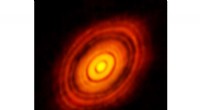
* This rapid rotation flattens the collapsing cloud into a spinning disk.
3. Heating:
* Gravitational potential energy is converted into heat as the nebula collapses.
* The center of the disk gets progressively hotter, eventually reaching temperatures high enough to ignite nuclear fusion.
4. Formation of the Sun:
* The core of the disk, now incredibly hot and dense, becomes the Sun.
* Nuclear fusion begins, releasing immense energy and stabilizing the Sun.
5. Formation of Planets:
* Within the disk, dust particles clump together, forming planetesimals.
* These planetesimals, through collisions and gravitational attraction, grow larger, eventually becoming planets.
* The composition of planets depends on their distance from the Sun—rocky planets closer to the Sun and gas giants farther out.
6. Clearing of the Nebula:
* As the Sun burns, it expels solar wind, pushing remaining gas and dust away from the solar system.
* This process eventually leaves behind the planets we see today.
Other Notable Effects:
* Formation of moons: Some planets acquire moons through capture or accretion of smaller objects within their gravitational field.
* Asteroid belt and Kuiper belt: Leftover planetesimals that didn't accrete into planets form these belts of smaller bodies.
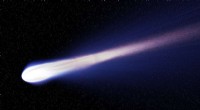
* Comets: Icy bodies from the outer solar system, sometimes perturbed by gravitational interactions, become comets that orbit the Sun.
In summary, the contraction of the solar nebula sets off a chain reaction of events that leads to the formation of our Sun and the planets around it. This process, driven by gravity and conservation of angular momentum, transforms a cloud of dust and gas into the intricate, diverse solar system we know today.