Planets:
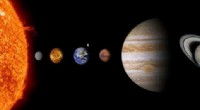
* Inner Planets: Mercury, Venus, Earth, Mars
* Outer Planets: Jupiter, Saturn, Uranus, Neptune
Dwarf Planets:
* Pluto
* Ceres
* Eris
* Makemake
* Haumea
Moons:
* Earth's Moon
* Moons of Jupiter, Saturn, Uranus, and Neptune
Asteroids:
* Rocky, irregularly shaped objects mostly found in the asteroid belt between Mars and Jupiter.
Comets:
* Icy bodies that orbit the Sun in highly elliptical paths, often leaving a trail of gas and dust.
Other Objects:
* Trans-Neptunian Objects (TNOs): Objects that orbit beyond Neptune, including Pluto and other dwarf planets.
* Centaurs: Objects that have unstable orbits crossing the orbits of Jupiter, Saturn, Uranus, and Neptune.
* Kuiper Belt Objects: Objects located in a disk-shaped region beyond Neptune.
* Oort Cloud Objects: Hypothetical icy bodies thought to be located far beyond the Kuiper Belt.
Dust and Gas:
* Interplanetary Dust: Microscopic particles of rock and ice that travel throughout the solar system.
* Solar Wind: A stream of charged particles continuously emitted from the Sun.
This list covers the most significant objects that travel around the Sun. There are also countless smaller bodies, including meteoroids and space debris, that orbit our star.