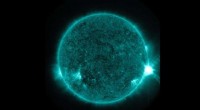
* Stars: Their formation, evolution, properties, and interactions.
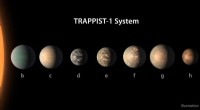
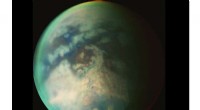
* Planets: Their formation, composition, atmospheres, and potential for life.
* Galaxies: Their structure, evolution, and distribution in the universe.
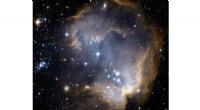
* Nebulae: Clouds of gas and dust where stars are born.
* Black holes: Regions of spacetime where gravity is so strong that nothing, not even light, can escape.
* Supernovae: Exploding stars that release tremendous amounts of energy.
* Cosmic microwave background radiation: A faint afterglow of the Big Bang.
In essence, astronomy seeks to understand the origin, evolution, and structure of the universe. It uses a wide range of tools and methods, including:
* Telescopes: To observe celestial objects in various wavelengths of light (visible, infrared, ultraviolet, etc.).
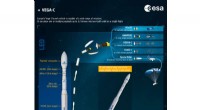
* Spacecraft: To explore planets, moons, and other celestial bodies up close.
* Mathematical models: To simulate and understand complex astronomical phenomena.
* Computer simulations: To model the evolution of galaxies, stars, and the universe.
Astronomy is a fascinating and ever-evolving field, constantly pushing the boundaries of our understanding of the cosmos.