Gravity:
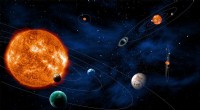
* The Sun's massive size and composition (mostly hydrogen and helium) create an incredibly strong gravitational pull. This force is what keeps the planets in orbit around the Sun.
* Planets are constantly "falling" towards the Sun due to its gravity. But because they are also moving forward, their trajectory results in a circular or elliptical orbit.
* The farther a planet is from the Sun, the weaker the gravitational force it experiences. This is why planets farther out have longer orbital periods.
Energy:
* The Sun is a giant ball of hot gas undergoing nuclear fusion. This process releases tremendous amounts of energy in the form of light and heat.
* This energy reaches the planets, providing them with warmth and light. The amount of energy received by a planet depends on its distance from the Sun.
* This energy plays a vital role in shaping a planet's environment. It drives weather patterns, influences atmospheric composition, and even allows for the possibility of life.
Other Key Aspects:
* The Sun's gravitational pull also influences the planets' rotation. This is why most planets in our solar system rotate in the same direction as their orbital motion.
* The Sun's powerful solar wind constantly pushes on the planets. This can create auroras and affect their magnetic fields.
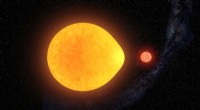
* The Sun's lifespan and eventual death will significantly influence the future of the planets. As the Sun ages, it will become larger, hotter, and eventually evolve into a red giant.
Understanding the relationship between the Sun and planets is crucial for understanding the dynamics of our solar system and the evolution of the universe itself. It's a continuous, interconnected system where every element plays a crucial role.