* Gravitational attraction depends on both mass and distance. A planet's gravitational pull is influenced by its mass (how much "stuff" it has) and the distance you are from its center.
* Surface gravity is a more useful comparison. To make a fair comparison, we often look at the surface gravity of a planet. This is the gravitational force experienced by an object on the planet's surface.
* Surface gravity is a measure of acceleration due to gravity. A higher surface gravity means a stronger pull and a faster rate of acceleration towards the planet's center.
Here's a list of planets in our solar system ordered by increasing surface gravity:
1. Mercury: 3.7 m/s²
2. Mars: 3.71 m/s²
3. Pluto: 0.62 m/s² (dwarf planet)
4. Venus: 8.87 m/s²
5. Earth: 9.81 m/s²
6. Neptune: 11.15 m/s²
7. Uranus: 8.87 m/s²
8. Saturn: 10.44 m/s²
9. Jupiter: 24.79 m/s²
Important Notes:
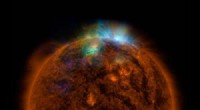
* This list excludes the Sun, which has a much higher surface gravity than any planet.
* The value for Pluto is approximate, as it's a dwarf planet and its gravitational field isn't as consistent as planets.
* You can experience the difference in surface gravity by jumping on each planet. You'd jump much higher on Mercury or Mars than on Earth, and barely be able to budge on Jupiter!
Let me know if you'd like to explore the reasons for these differences or compare the gravitational attraction of different planets at specific distances!