* Stars form from gas clouds: The Milky Way's interstellar medium (ISM) is mostly composed of hydrogen and helium, with trace amounts of heavier elements. These elements are the building blocks of stars.
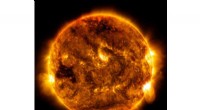
* Stars produce heavier elements: During their lifetimes, stars fuse lighter elements into heavier ones. This process, called nuclear fusion, creates elements like carbon, oxygen, nitrogen, and iron, which are essential for life as we know it.
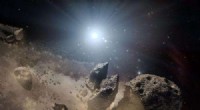
* Stars release heavy elements back into the ISM: When massive stars die in supernova explosions, they expel these heavier elements into the surrounding space, enriching the interstellar medium.
* New stars form from enriched gas: The enriched gas then forms new generations of stars, which in turn create even heavier elements, and the cycle continues.
This cycle plays a crucial role in the evolution of galaxies, leading to:
* Formation of more complex stars: Stars born from enriched gas are often more massive and have different compositions, leading to a greater diversity of stars within the galaxy.
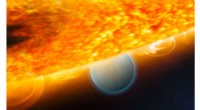
* Formation of planets: The presence of heavier elements provides the building blocks for planets, making planetary systems more likely to form.
* The development of life: The heavier elements released by stars are essential for the formation of complex molecules and, ultimately, the development of life.
So, in essence, the star-gas-star cycle acts as a giant recycling program for the Milky Way, constantly enriching its gas with heavier elements and creating the building blocks for new stars, planets, and potentially life.