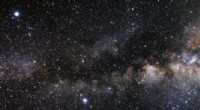
1. Solar Nebula: The solar system began as a vast cloud of gas and dust called a nebula. This cloud was mostly hydrogen and helium, with small amounts of heavier elements.
2. Gravitational Collapse: Over millions of years, the nebula began to collapse under its own gravity. As it collapsed, the cloud spun faster and faster, forming a rotating disk.
3. Planetesimals: Within the disk, tiny dust particles began to clump together, forming larger and larger objects called planetesimals. These were like miniature planets, only a few kilometers across.
4. Accretion: Planetesimals continued to collide and stick together, growing larger and larger. This process, known as accretion, eventually formed the planets we know today.
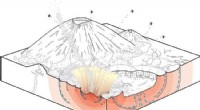
5. Differentiation: As the planets grew, their internal temperatures increased due to gravitational pressure and radioactive decay. This heat caused the planets to differentiate, with denser materials sinking to the core and lighter materials forming the crust and mantle.
Key Points:
* Time Scale: The formation of the solar system took billions of years.
* Planetary Diversity: Different planets formed in different regions of the solar nebula, resulting in the diverse compositions and sizes we see today.
* Evidence: Scientists have gathered evidence from meteorites, lunar samples, and spacecraft missions to support the accretion theory.
It's important to remember that this is a simplified explanation. The formation of the solar system is a complex process that scientists are still trying to fully understand.