Within our Solar System:
* Planets and Moons: They study the atmospheres, surfaces, and compositions of planets and their moons, looking for signs of past or present life. For example, the Mars rovers are searching for evidence of water and microbial life on Mars.
* Asteroids and Comets: They investigate the composition and origins of these small celestial bodies, which can provide clues about the early solar system.
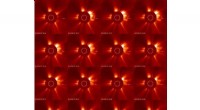
* The Sun: They study the Sun's activity, including its magnetic field, solar flares, and coronal mass ejections.
* Space Weather: They monitor the space environment around Earth, including solar wind and radiation, which can affect satellites and astronauts.
Beyond our Solar System:
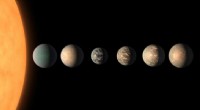
* Exoplanets: They search for planets orbiting other stars, investigating their properties, potential habitability, and atmospheres.
* Interstellar Space: They study the composition and properties of the vast space between stars, looking for clues about the evolution of the universe.
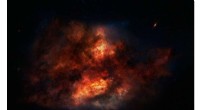
* Galaxies and Nebulae: They observe the formation and evolution of galaxies, star clusters, and nebulae, revealing the structure and history of the universe.
Specific examples of what space probes explore:
* Atmospheric composition: Determining the makeup of a planet's atmosphere, such as the presence of water vapor, methane, or oxygen.
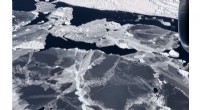
* Surface features: Mapping the surface of a planet or moon, identifying geological formations, mountains, craters, and other landforms.
* Magnetic fields: Measuring the strength and direction of magnetic fields, which can reveal information about a planet's internal structure and activity.
* Chemical composition: Analyzing the elemental and molecular composition of rocks, dust, and gases, providing insights into the origin and evolution of celestial bodies.
* Gravitational fields: Studying the gravitational pull of planets and other celestial objects, which can reveal their mass and density.
The types of data space probes collect:
* Images: Capturing stunning photographs of planets, moons, and other celestial objects.
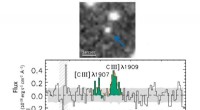
* Spectra: Measuring the wavelengths of light emitted or absorbed by celestial objects, revealing their chemical composition and temperature.
* Magnetic field measurements: Detecting and measuring magnetic fields, revealing information about the internal structure and activity of celestial objects.
* Particle data: Collecting data on the composition and energy of particles in space, including solar wind and cosmic rays.
Space probes are essential tools for expanding our knowledge of the universe, providing invaluable data that helps us understand the origin and evolution of our solar system and the universe as a whole.