Planets and Moons:
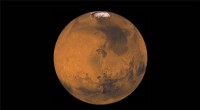
* Rocky planets (like Earth, Mars, and Mercury): These reflect sunlight due to their solid surfaces, though the amount of reflected light varies depending on the composition of the surface.
* Gaseous planets (like Jupiter, Saturn, Uranus, and Neptune): These reflect light from their thick atmospheres. The colors and patterns we see are caused by various gases and clouds within the atmosphere.
* Moons: Reflect light based on their composition, ranging from rocky surfaces like our Moon to icy surfaces like some of Jupiter's moons.
Stars:
* Stars themselves do not reflect light. They emit their own light due to nuclear fusion happening within their cores.
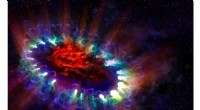
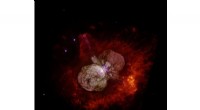
* However, the light from stars can be reflected by dust and gas clouds in space, creating beautiful nebulae.
Other Celestial Objects:
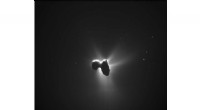
* Asteroids and comets: These objects often reflect sunlight, especially when they're close to the Sun and can be seen as bright streaks across the sky.
* Interstellar dust and gas clouds: While these don't reflect light in the same way as a mirror, they scatter and absorb light, creating intricate patterns and colors in space.
* Spacecraft: Spacecraft, especially those with large solar panels, reflect sunlight. Sometimes they can be seen as bright points of light in the night sky.
Important Note: The amount of light reflected depends on various factors, including the object's composition, size, and distance from the Sun.
Let me know if you want to delve into any of these categories in more detail!