Here's a breakdown:
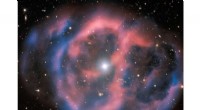
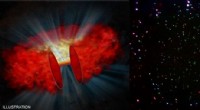
* Nova: A nova occurs when a white dwarf star in a binary system pulls matter from its companion star. This matter accumulates on the white dwarf's surface, creating a layer of hydrogen. Eventually, the hydrogen layer becomes so dense and hot that it ignites in a thermonuclear explosion, causing the star to suddenly brighten dramatically. This brightening can be so intense that the nova briefly outshines its entire host galaxy.
* Supernova: While novae are dramatic events, they are not as powerful as supernovas. Supernovas involve the complete destruction of a star, either through the collapse of a massive star's core or the runaway fusion of a white dwarf. Supernovae are significantly brighter than novae and have a longer-lasting impact on their surroundings.
Key Differences:
* Cause: Novae result from the accretion of matter onto a white dwarf, while supernovas result from the collapse of a massive star or the thermonuclear explosion of a white dwarf.
* Brightness: Novae are less bright than supernovas.
* Duration: Novae last for weeks or months, while supernovas can last for years.
* Effect: Novae are relatively minor events that don't destroy the star, while supernovas are catastrophic events that leave behind a neutron star or black hole.
In summary, a nova is a temporary, yet dramatic, brightening of a star caused by thermonuclear fusion on the surface of a white dwarf.