Nature:
* Sun: A star, a massive ball of hot gas that produces its own light and heat through nuclear fusion.
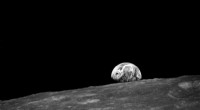
* Moon: A natural satellite, a rocky body that orbits a planet (in this case, Earth) and reflects light from the sun.
Size and Mass:
* Sun: Significantly larger than the moon, with a diameter 109 times larger than Earth's. It's also much more massive, containing over 99.8% of the mass of the entire solar system.
* Moon: Smaller than Earth, with a diameter roughly a quarter of Earth's.
Composition:
* Sun: Primarily composed of hydrogen and helium, undergoing nuclear fusion in its core.
* Moon: Mostly composed of rock and dust, with a thin atmosphere.
Temperature:
* Sun: Incredibly hot, with a surface temperature of around 5,500°C and a core temperature estimated to be millions of degrees Celsius.
* Moon: Has extreme temperature variations, with a surface temperature ranging from about -173°C during the lunar night to 127°C during the day.
Light:
* Sun: Emits its own light, producing a bright, white light.
* Moon: Does not emit its own light, but reflects light from the sun, appearing brighter than the stars.
Gravity:
* Sun: Has much stronger gravity than the moon, holding all the planets in the solar system in orbit.
* Moon: Has weaker gravity than Earth, which is why astronauts can jump higher on the moon.
Motion:
* Sun: Remains relatively stationary in the sky due to Earth's rotation.
* Moon: Appears to move across the sky due to its orbit around Earth.
In summary, the sun is a star that generates its own light and heat, while the moon is a rocky body that reflects light from the sun. Their differences extend to their size, composition, temperature, and even the way we perceive their movement in the sky.