* Mass vs. Density:
* Mass refers to the total amount of matter in a planet.
* Density is how tightly that matter is packed together.
* Planet Size:
* Planets can have a lower mass but a larger size because they're less dense.
Let's look at the planets in our solar system, considering both mass and density:
By Mass (Heaviest to Lightest):
1. Jupiter: The largest planet in our solar system, it's a gas giant with a massive amount of matter.
2. Saturn: Another gas giant, Saturn is less massive than Jupiter but still incredibly large.
3. Uranus: An ice giant, Uranus is much smaller than the gas giants but still more massive than the inner rocky planets.
4. Neptune: Another ice giant, Neptune is slightly smaller than Uranus but has a higher density.
5. Earth: The largest and densest of the inner rocky planets.
6. Venus: Very similar in size and mass to Earth.
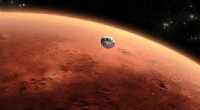
7. Mars: Significantly smaller and less massive than Earth.
8. Mercury: The smallest and least massive planet in our solar system.
By Density (Densest to Least Dense):
1. Earth: With a solid core of iron and nickel, Earth is the densest planet in our solar system.
2. Venus: Closely behind Earth in density due to its similar composition.
3. Mercury: It's small but has a large, iron core, making it dense.
4. Mars: A bit less dense than the inner three due to its lower iron content.
5. Neptune: An ice giant, it's more dense than Uranus due to its higher pressure.
6. Uranus: An ice giant, it's composed mostly of ice and gas.
7. Saturn: While massive, Saturn is the least dense planet because it's primarily made up of hydrogen and helium.
8. Jupiter: Despite being the largest, Jupiter is less dense than Saturn due to its less-compact composition.
Conclusion:
The order of planets from lightest to heaviest depends on whether you're considering mass or density.
Let me know if you'd like to explore the masses and densities of planets in more detail!