1. With the Naked Eye:
* Mercury, Venus, Mars, Jupiter, and Saturn are bright enough to be seen with the naked eye under the right conditions.
* These planets appear as bright "stars" in the night sky, but they don't twinkle like stars.
* Observing Tips: Look for them near the horizon, especially shortly after sunset or before sunrise.
2. Using Telescopes:
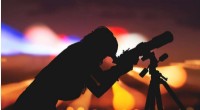
* All planets in our solar system are visible through telescopes.
* Telescopes magnify the image, allowing us to see details like the rings of Saturn or the moons of Jupiter.
* Types of telescopes: Refracting, reflecting, and Schmidt-Cassegrain telescopes are commonly used for planet observation.
3. Using Spacecraft:
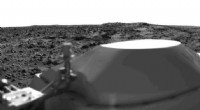
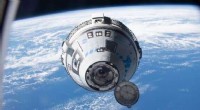
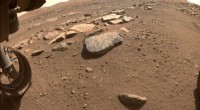
* Space probes like Voyager and Cassini have sent back stunning images of planets, moons, and other celestial bodies.
* These images provide detailed information about the surface features, atmospheres, and compositions of these objects.
4. Using Light Detection:
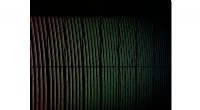
* Astronomers use specialized instruments like spectrometers to analyze the light emitted by planets.
* This allows them to study the planet's atmosphere, composition, and temperature.
5. Using Indirect Methods:
* Exoplanets, planets outside our solar system, are often discovered indirectly.
* Techniques like the transit method (detecting the dimming of a star's light as a planet passes in front of it) and the radial velocity method (measuring the wobble in a star's movement due to a planet's gravity) are used.
Important Note: The best time to see planets depends on their position in the sky, which changes over time. It's helpful to consult an astronomical calendar or stargazing app for the best viewing times and locations.