* They are both part of the same solar system: Both terrestrial planets and gas giants orbit the same star, the Sun.
* They are both formed from the same protoplanetary disk: Both types of planets formed from the swirling disk of gas and dust that surrounded our young Sun.
* They are both subject to the same forces: Both types of planets are affected by gravity, solar radiation, and other forces within the solar system.
* They both have atmospheres: While the compositions and thicknesses are vastly different, both types of planets have some sort of atmosphere.
Here's a breakdown of their differences:
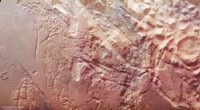
* Composition: Terrestrial planets are primarily composed of rock and metal, while gas giants are made mostly of hydrogen and helium.
* Density: Terrestrial planets are much denser than gas giants.
* Size: Terrestrial planets are much smaller than gas giants.
* Structure: Terrestrial planets have solid surfaces, while gas giants are composed of gas and have no defined surface.
* Moons: While some terrestrial planets have moons (like Earth and Mars), gas giants generally have a larger number of moons.
* Rings: Gas giants are known for having prominent ring systems, while terrestrial planets do not.
In summary: While both terrestrial planets and gas giants are part of the same solar system and share some common characteristics, their fundamental composition, structure, and physical properties are vastly different.