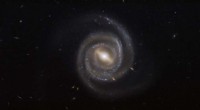
1. The Universe is Expanding:
* Redshift: Redshift is the phenomenon where light from distant objects appears shifted towards the red end of the electromagnetic spectrum. This shift is caused by the Doppler effect, similar to how the sound of a siren changes as it moves towards or away from you.
* Expansion: The greater the redshift, the faster the galaxy is moving away from us. This implies that the universe is expanding, and that the expansion is accelerating.
2. Hubble's Law:
* Relationship: The relationship between redshift and distance was first observed by Edwin Hubble. Hubble's Law states that the farther away a galaxy is, the faster it is moving away from us.
* Constant: This relationship is described by a constant known as the Hubble constant, which represents the rate of expansion of the universe.
3. Age of the Universe:
* Estimation: The observed redshift of distant galaxies, combined with Hubble's Law, allows astronomers to estimate the age of the universe.
* Assumptions: This estimate relies on assumptions about the uniformity and smoothness of the universe's expansion.
4. Cosmic Microwave Background:
* Leftover Radiation: The redshift of distant galaxies also provides evidence for the Big Bang theory. The cosmic microwave background (CMB), a faint afterglow of the Big Bang, exhibits a redshift consistent with the expanding universe.
In summary: A distant galaxy with greater redshift tells us the universe is expanding, and that the rate of expansion is proportional to the distance between galaxies. This observation, along with the cosmic microwave background, strongly supports the Big Bang theory as the most likely explanation for the origin and evolution of the universe.