* Gas: Primarily hydrogen and helium, the most abundant elements in the universe.
* Dust: A mix of various materials, including:
* Refractory dust: Materials that resist vaporization at high temperatures, like silicates (rock-forming minerals) and metals (iron, nickel).
* Volatile dust: Materials that easily vaporize at lower temperatures, like ices (water, methane, ammonia). These ices were more abundant further out in the protoplanetary disk, where temperatures were cooler.
* Trace Elements: Small amounts of heavier elements, including carbon, nitrogen, oxygen, and sulfur.
* Short-Lived Radioactive Isotopes: These isotopes decayed quickly and provided a significant source of heat to the protoplanetary disk.
Important Note:
The inner 0.3 AU region was incredibly hot due to the Sun's intense radiation. This meant that most of the volatile ices would have vaporized, leaving behind mainly refractory dust and gas.
Formation of Planets:
This dense and hot disk was the birthplace of our solar system's planets. Over millions of years, tiny dust particles began to stick together, growing into larger and larger objects. This process of accretion eventually led to the formation of the rocky planets: Mercury, Venus, Earth, and Mars, within the inner 0.3 AU.
Further Research:
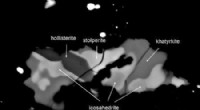
Scientists continue to study the composition of the inner solar system through meteorites, which are remnants of this early period. They also use telescopes to observe protoplanetary disks around other stars, gaining insights into how planetary systems form.