1. Observations:
* Telescopic Observations: Telescopes allow us to see stars at different stages of their lives. Observing the color, brightness, temperature, and size of stars provides clues about their age and evolutionary stage.
* Spectroscopy: Analyzing the light from stars using spectroscopy allows us to identify the chemical composition and the presence of elements like hydrogen, helium, and heavier elements. This reveals how stars change their composition over time.
* Stellar Clusters: Studying clusters of stars, which are born at roughly the same time, allows scientists to see how stars of different masses evolve at different rates. This provides crucial information about the relationship between stellar mass and lifespan.
2. Theoretical Models:
* Nuclear Physics: Understanding how nuclear fusion powers stars is essential. Scientists use models based on nuclear physics to calculate the energy production rates and the changes in composition inside stars.
* Computer Simulations: Powerful computer simulations help scientists model the internal structure, energy transfer, and evolution of stars. These simulations can explore various scenarios and test different theories.
3. Fundamental Physics:
* Gravity: Gravity plays a crucial role in stellar evolution. Stars are held together by their own gravity, and this force determines their size, stability, and eventual fate.
* Thermodynamics: The laws of thermodynamics govern energy transfer and how stars maintain their internal balance. This allows scientists to predict the temperature, pressure, and density inside stars.
The Life Cycle of Stars:
By combining these observational, theoretical, and fundamental physics elements, scientists have pieced together a comprehensive understanding of the life cycle of stars:
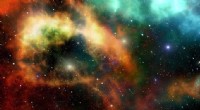
* Nebula: Stars are born from giant clouds of gas and dust called nebulae.
* Protostar: Gravity pulls material in the nebula together, forming a protostar.
* Main Sequence: The protostar becomes a main sequence star when nuclear fusion ignites in its core, generating energy that counteracts gravity.
* Red Giant: As a star's hydrogen fuel runs out, it expands into a red giant.
* White Dwarf, Neutron Star, or Black Hole: The final stage of a star's life depends on its mass. Low-mass stars become white dwarfs, while massive stars can become neutron stars or black holes.
Ongoing Research:
Scientists are continuously refining our understanding of stellar evolution. New telescopes and observational techniques provide more detailed data, and advancements in computer simulations allow us to test and refine theoretical models. The study of star formation and evolution is an active and exciting area of research in modern astronomy.