1. Gravity's Pull: Within these clouds, called nebulae, tiny particles of dust and gas are constantly moving. Gravity acts as a force, pulling these particles towards each other.
2. Accretion: As more and more particles are pulled together, the cloud becomes denser. This denser region is known as a protostar.
3. Heat and Pressure: As the protostar grows, the gravitational pull increases, causing the particles to move faster and collide more often. This collision generates immense heat and pressure.
4. Nuclear Fusion: Eventually, the pressure and temperature at the core of the protostar become so intense that nuclear fusion begins. This is the process where hydrogen atoms combine to form helium, releasing an enormous amount of energy.
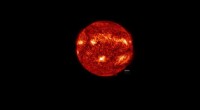
5. Star Birth: The energy released by nuclear fusion creates outward pressure that balances the inward pull of gravity, stabilizing the star and allowing it to shine for billions of years.
So, gravity is the key force that initiates and drives the process of star formation, bringing together vast amounts of matter and creating the conditions for nuclear fusion to occur.