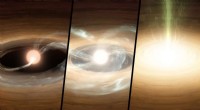
Here's a breakdown of the process:
1. Gravitational Collapse: The nebula, mostly composed of hydrogen and helium, began to collapse under its own gravity. This collapse was likely triggered by a nearby supernova explosion or some other disturbance.
2. Rotation and Heating: As the nebula contracted, it started to spin faster, like a figure skater pulling in their arms. This rotation also caused the material to heat up.
3. Protostar Formation: At the center of the collapsing nebula, a hot, dense core formed. This core is called a protostar.
4. Nuclear Fusion Ignition: The protostar continued to grow and heat up until the core reached a temperature and pressure high enough to initiate nuclear fusion. This is when hydrogen atoms started fusing together to form helium, releasing immense energy.
5. Star Birth: This release of energy creates outward pressure that balances the inward force of gravity, stopping the collapse. The protostar becomes a stable star, in this case, our sun.
So, in short, our sun was born from a gigantic cloud of gas and dust that collapsed under its own gravity and eventually ignited nuclear fusion.