1. Earth's Rotation:
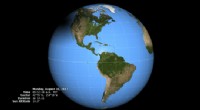
* Earth rotates on its axis every 24 hours, completing one full rotation. This rotation is what causes day and night.
* As the Earth rotates, different parts of the planet face the sun. When a location faces the sun, it experiences daylight. As the Earth continues to rotate, that location moves away from the sun and experiences night.
* The angle of the sun in the sky changes throughout the day. In the morning, the sun rises in the east, appears low in the sky, and casts long shadows. As the Earth rotates, the sun climbs higher in the sky, reaching its peak around noon, and the shadows shorten. In the evening, the sun descends towards the west, casting longer shadows again.
2. Earth's Revolution:
* Earth revolves around the sun in an elliptical orbit. This journey takes approximately 365.25 days to complete, which is why we have a year.
* The Earth's tilt on its axis (approximately 23.5 degrees) means that different parts of the Earth receive varying amounts of sunlight throughout the year. This is the main reason for the seasons.
* During the summer solstice, the hemisphere tilted towards the sun experiences the longest day and shortest night, while the hemisphere tilted away experiences the shortest day and longest night.
* The changing angle of the sun's rays reaching the Earth due to the Earth's revolution affects the length and direction of shadows.
In summary:
* Earth's rotation is responsible for the daily changes in the sun's position and shadow length.
* Earth's revolution causes seasonal changes in the sun's position and shadow length.
These two factors work together to create the dynamic and ever-changing patterns of sunlight and shadows that we experience on Earth.