1. Internal Processes:
* Tidal Heating: The gravitational pull of their host planets creates tidal forces that stretch and compress the moons' interiors. This constant flexing generates friction and heat, leading to internal melting and volcanic activity. This is particularly prominent on Jupiter's moon Io, resulting in active volcanism and surface resurfacing.
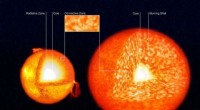
* Differentiation: The heat generated by tidal heating and radioactive decay can cause the moon's interior to melt and separate into distinct layers based on density. This process, known as differentiation, leads to the formation of a core, mantle, and crust. This is evident on moons like Ganymede and Callisto, where distinct layers can be observed through their gravitational fields.
* Cryovolcanism: Instead of molten rock, some moons have internal oceans of water or other volatile materials. These oceans can erupt onto the surface, creating cryovolcanoes, which are volcanoes that erupt ice, ammonia, or other volatile substances. Examples include Saturn's moons Enceladus and Titan.
2. Surface Processes:
* Cratering: Impacts from asteroids, comets, and other space debris create craters on the surfaces of moons. The density and size of craters reveal the age of a moon's surface. Heavily cratered surfaces are ancient, while younger surfaces have fewer craters.
* Tectonics: The movement of tectonic plates, similar to what happens on Earth, can occur on some moons, leading to the formation of mountains, valleys, and other geological features. This is most evident on Ganymede, which has a very complex tectonic history.
* Erosion: The constant bombardment of charged particles from their host planet's magnetosphere, as well as solar wind, can erode the surfaces of moons. This process can cause darkening of the surface and smoothing out of craters.
* Atmospheric Processes: Some moons have very thin atmospheres, which can be influenced by processes like outgassing from the interior or erosion of the surface. These atmospheres can contribute to the formation of clouds, precipitation, and even weather patterns.
3. Other Processes:
* Magnetic Fields: Some moons, like Ganymede, have their own magnetic fields. These fields can shield them from charged particles in the host planet's magnetosphere.
* Orbital Evolution: The orbits of moons can change over time due to gravitational interactions with other moons or with their host planet. These changes can affect the internal heating, surface processes, and ultimately the long-term evolution of a moon.
The specific processes occurring on a particular moon depend on its size, composition, distance from its host planet, and other factors. Studying the various processes at work on these moons provides valuable insights into the formation and evolution of planetary systems and the potential for life beyond Earth.