Here's why:
* Resolution: The resolution of your eyes (or any optical instrument) refers to its ability to distinguish between two closely spaced objects. It's limited by the diffraction of light, which causes light waves to spread out as they pass through the pupil of your eye.
* Angular Separation: This refers to the angle between the two stars as seen from Earth.
* Diffraction Limit: If the angular separation between the stars is smaller than the diffraction limit of your eye, the light from both stars will overlap significantly, making them appear as a single blurry point.
Example: Imagine two tiny lights close together. If you are far enough away, you might only see one blurry light, even though there are two separate sources.
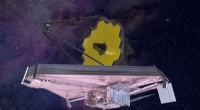
Note: Telescopes have much better resolution than the human eye, and can therefore distinguish between stars that appear as a single point to our naked eye.