1. Observing Space Weather:
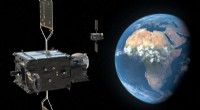
* Satellites: Numerous satellites constantly monitor the Sun, Earth's magnetosphere, and the interplanetary medium. These satellites measure:
* Solar flares: These are intense bursts of radiation from the Sun.
* Coronal Mass Ejections (CMEs): Huge bubbles of plasma and magnetic fields ejected from the Sun.
* Solar wind: A stream of charged particles constantly flowing from the Sun.
* Magnetic field strength and direction: This affects how the solar wind interacts with Earth.
* Energetic particles: These can cause radiation hazards to spacecraft and astronauts.
* Ground-based instruments: These monitor things like:
* Geomagnetic field variations: Changes in Earth's magnetic field caused by solar activity.
* Auroras: These beautiful displays of light in the sky are caused by charged particles interacting with Earth's atmosphere.
* Radio waves: These can be disrupted by space weather events.
2. Modeling Space Weather:
* Computer models: Using the data gathered from satellites and ground-based instruments, scientists use complex computer models to:
* Predict the trajectory and intensity of CMEs: This helps forecast when and where they will impact Earth.
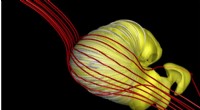
* Simulate the interactions of the solar wind with Earth's magnetic field: This helps predict the strength and duration of geomagnetic storms.
* Forecast the flow of energetic particles: This is crucial for protecting astronauts and spacecraft.
3. Forecasting and Warnings:
* Space weather centers: Agencies like NOAA's Space Weather Prediction Center (SWPC) collect data from various sources, analyze it using models, and issue forecasts and warnings about potential space weather events. These warnings are crucial for:
* Protecting astronauts and spacecraft: Spacecraft can be damaged by radiation and charged particles, and astronauts need to be shielded.
* Safeguarding power grids: Geomagnetic storms can disrupt power grids.
* Ensuring accurate GPS navigation: Space weather can disrupt GPS signals.
* Protecting communication systems: Radio waves can be disrupted, impacting communication systems.
It's important to note that:
* Space weather forecasting is still a developing field. Predictions are not always perfect.
* The Sun's activity varies in cycles, making long-term predictions challenging.
* As our understanding of space weather improves, forecasting capabilities will become more accurate and reliable.