Notable Stars:
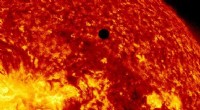
* Our Sun: This is our closest star, a yellow dwarf. While not the biggest or brightest, it's crucial for life on Earth.
* Sirius (Alpha Canis Majoris): The brightest star in our night sky, a binary star system with a white dwarf companion.
* Proxima Centauri: The closest star to our Sun, a red dwarf in the Alpha Centauri system.
* Betelgeuse (Alpha Orionis): A red supergiant star, one of the largest and brightest stars in our night sky.
* Polaris (Alpha Ursae Minoris): The North Star, a yellow supergiant, used for navigation.
* Vega (Alpha Lyrae): A blue-white main sequence star, one of the brightest stars in our sky.
* Arcturus (Alpha Boötis): An orange giant star, one of the brightest in the northern hemisphere.
Notable Features:
* The Galactic Center: A dense region in the Milky Way, containing a supermassive black hole called Sagittarius A*.
* The Sagittarius Arm: One of the major spiral arms of the Milky Way, containing numerous star-forming regions.
* The Perseus Arm: Another major spiral arm, also home to many star-forming regions.
* The Galactic Bulge: A central region of the Milky Way, densely populated with stars.
* The Galactic Halo: A spherical region surrounding the Milky Way, containing older stars and globular clusters.
It's important to note that the Milky Way is a vast and complex galaxy, and there are many other interesting stars and features beyond these examples.