Similarities:
* Orbiting bodies: Both asteroids and moons orbit larger celestial bodies, like planets or stars.
* Composition: Both can be made up of rock, ice, or a combination of both.
* Shape: While many asteroids are irregularly shaped, some can be quite round, and moons can also come in various shapes.
* Gravity: Both asteroids and moons have their own gravitational pull, though it's much weaker than that of larger celestial bodies.
Differences:
* Size: Moons are generally much larger than asteroids. The smallest moon in our solar system is still larger than the largest asteroid.
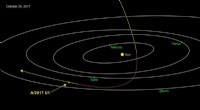
* Orbit: Moons typically orbit a planet, while asteroids orbit the Sun. Some asteroids, however, can be captured by a planet's gravity and become its moon.
* Formation: Moons typically form along with their parent planet, while asteroids form independently in the early solar system.
* Atmosphere: Most moons have no atmosphere, while some asteroids might have a very thin, tenuous atmosphere.
* Geological activity: Some moons are geologically active, with volcanoes, tectonic plates, or other features, while asteroids are generally inactive.
Here's a table summarizing the key differences:
| Feature | Asteroid | Moon |
|----------------|----------|------|
| Size | Small | Large |
| Orbit | Sun | Planet |
| Formation | Independent | Along with planet |
| Atmosphere | None (generally) | None (generally) |
| Geological Activity | Inactive | Can be active |
In conclusion, while both asteroids and moons are celestial objects, they differ significantly in size, origin, and activity. Their similarities lie in their orbital nature and composition.