1. Telescopic Observation:
* Earth-based Telescopes: Using powerful telescopes, scientists can study the Moon's surface, craters, mountains, and other features. They analyze the light reflected from the Moon to understand its composition and geological history.
* Space Telescopes: Telescopes like the Hubble Space Telescope provide high-resolution images and spectral data, helping scientists understand the Moon's composition and surface changes over time.
2. Spacecraft Missions:
* Orbiters: Spacecraft like Lunar Reconnaissance Orbiter (LRO) and Chandrayaan-1 orbit the Moon, capturing detailed images, mapping the surface, and studying its gravity and magnetic field.
* Landers: Landers like Apollo, Luna, and Chang'e land on the Moon's surface, collecting samples, conducting experiments, and providing direct observations of the lunar environment.
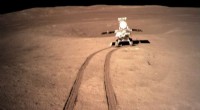
* Rovers: Rovers like the Yutu series explore the Moon's surface, collecting samples, analyzing the composition of rocks and soil, and studying the lunar environment.
3. Sample Analysis:
* Lunar Rocks and Soil: Samples collected by Apollo missions and other landers are analyzed in laboratories to determine their composition, age, and origin. This information helps scientists understand the Moon's formation, evolution, and history.
* Meteorites: Some meteorites found on Earth are believed to be fragments of the Moon, providing valuable insights into its composition and the early solar system.
4. Remote Sensing:
* Spectroscopy: Scientists use spectrometers to analyze the light reflected from the Moon, identifying the presence of different minerals and elements.
* Radar: Radar signals can penetrate the lunar surface, revealing subsurface structures and features.
5. Numerical Modeling:
* Computer Simulations: Scientists use computer models to simulate the Moon's formation, evolution, and internal structure. These models help them test theories and predict how the Moon may have changed over time.
By combining data from these various methods, scientists are constantly gaining new knowledge about the Moon, its formation, its composition, its evolution, and its potential for future exploration.