Shape and Structure:
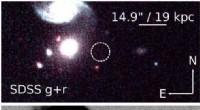
* Elliptical Galaxies: As the name suggests, these galaxies have a smooth, elliptical shape with no discernible spiral arms. They can range from nearly spherical to very elongated, with a gradual decrease in brightness from the center to the edges.
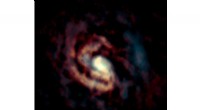
* Spiral Galaxies: These galaxies feature a flat, rotating disk with prominent spiral arms that wind outward from a central bulge. The bulge itself can be quite similar to the central region of an elliptical galaxy.
Stellar Content:
* Elliptical Galaxies: They primarily contain older, redder stars, with very little gas and dust. This is due to the fact that elliptical galaxies have a lower rate of star formation compared to spiral galaxies.
* Spiral Galaxies: Spiral galaxies are characterized by a mix of older and younger stars, as well as significant amounts of gas and dust. This is because they are actively forming stars in their spiral arms.
Rotation:
* Elliptical Galaxies: They have a slow, random motion of stars, unlike the organized rotation of spiral galaxies. Some elliptical galaxies may not even rotate at all.
* Spiral Galaxies: These galaxies rotate rapidly, with stars and gas moving in a coordinated pattern around the galactic center.
Size and Mass:
* Elliptical Galaxies: They are generally larger and more massive than spiral galaxies.
* Spiral Galaxies: They are typically smaller and less massive than elliptical galaxies, although there are exceptions.
Evolution:
* Elliptical Galaxies: They are thought to be older galaxies that have exhausted most of their gas and dust, resulting in a lower rate of star formation.
* Spiral Galaxies: They are still actively forming new stars, with the spiral arms being regions of intense star formation.
Other Characteristics:
* Elliptical Galaxies: Have a more uniform distribution of stars.
* Spiral Galaxies: Often have a central bar structure and can have different types of spiral arms.
In summary:
| Characteristic | Elliptical Galaxies | Spiral Galaxies |
|---|---|---|
| Shape | Smooth, elliptical | Flat disk with spiral arms |
| Stellar Content | Older, redder stars | Mix of older and younger stars |
| Rotation | Slow, random | Rapid, organized rotation |
| Size & Mass | Larger, more massive | Smaller, less massive |
| Evolution | Older, less active | Actively forming stars |
It's important to note that these are general characteristics and there are exceptions to every rule. There are also galaxies that don't fit neatly into either category, such as lenticular galaxies which possess characteristics of both elliptical and spiral galaxies.