Planets: These are celestial bodies that orbit a star. You can spot planets like Venus, Mars, Jupiter, and Saturn with the naked eye. They appear as bright, steady points of light, unlike stars which twinkle.
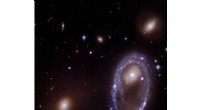
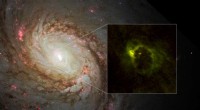
Galaxies: These are massive collections of stars, gas, and dust held together by gravity. The Milky Way, our own galaxy, is visible as a faint band of light stretching across the night sky. You can also spot other galaxies like Andromeda with a telescope.
Meteors (Shooting Stars): These are small particles of debris from comets or asteroids that burn up in the Earth's atmosphere, creating a streak of light. They often occur in showers at specific times of year.
Satellites: Human-made objects orbiting the Earth, like the International Space Station, can be seen as bright moving lights in the sky.
Nebulae: These are clouds of gas and dust in space. Some nebulae are bright and glowing, while others are dark and absorb light.
Comets: These are icy bodies that orbit the sun. When they get close to the sun, they heat up and release gas and dust, creating a bright tail.
Aurora Borealis (Northern Lights) and Aurora Australis (Southern Lights): These are spectacular displays of colored light in the sky caused by charged particles from the sun interacting with the Earth's magnetic field.
Constellations: These are patterns of stars that ancient cultures imagined as figures, animals, or objects. While not actual celestial objects, they help us navigate and understand the night sky.
Artificial Satellites: These are human-made objects that orbit the Earth, including the International Space Station and many other communication and research satellites. They can be seen as bright moving lights in the sky.
So, the next time you look up at the night sky, remember that you are gazing upon a universe filled with wonder and mystery.