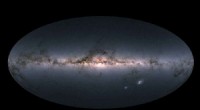
* Universe: The universe refers to everything that exists, including all matter, energy, space, and time. It's vast and encompasses countless galaxies, each containing billions of stars.
* Solar System: Our solar system is a much smaller entity, consisting of the Sun, planets, moons, asteroids, and other celestial bodies that are gravitationally bound to the Sun.
Think of it like this:
* Universe: The entire library.
* Solar System: A single book on a shelf in that library.
So, while the solar system is part of the universe, it's not a "universe" itself.
Instead of "universe," you could use terms like:
* Solar System: The collection of planets, moons, and other objects orbiting the Sun.
* Galaxy: The Milky Way galaxy, which contains our solar system.
* Local Group: A cluster of galaxies that includes the Milky Way.
Let me know if you have any other questions!