Planets:
* Orbit a star: Planets are celestial bodies that orbit a star, like our Sun.
* Reflect light: Planets don't produce their own light. They shine because they reflect light from their star.
* No nuclear fusion: Planets don't have the mass or internal pressure to sustain nuclear fusion, the process that powers stars.
* Varying sizes and compositions: Planets come in a range of sizes and compositions, from rocky planets like Earth to gas giants like Jupiter.
Fixed Stars:
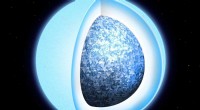
* Massive and luminous: Stars are massive, self-luminous spheres of hot, ionized gas. They produce their own light and heat through nuclear fusion in their cores.
* Produce their own light: Stars are the primary sources of light in the universe.
* Vast distances: Stars are located at vast distances from Earth, and their apparent positions in the sky remain relatively fixed over time. This is why they are called "fixed" stars.
* Life cycle: Stars have a life cycle, from birth to death. This cycle is determined by their initial mass and composition.
In Summary:
Planets revolve around stars and shine by reflecting light. Stars are massive, luminous objects that produce their own light and heat.