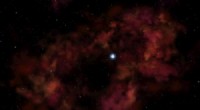
* Star formation is a slow process: Stars are born in massive clouds of gas and dust called nebulae. The process of these clouds collapsing under gravity and forming stars takes millions, if not billions, of years.
* We don't have a perfect census: We can't directly observe all the star formation happening in the universe. It's very difficult to detect stars in their very early stages of formation, especially those hidden behind clouds of gas and dust.
* Rates vary across the universe: The rate of star formation isn't constant. Some regions of the universe are more active in star formation than others.
Instead of a precise number, astronomers can estimate the overall rate of star formation in the universe. This is often measured in terms of solar masses per year, meaning how much mass worth of stars is being created annually. Estimates put this rate at around 1-3 solar masses per year.
To put that into perspective: If we divide those estimates by the number of hours in a year (8,760), we get a rough estimate of 0.0001 to 0.0003 solar masses of stars being formed per hour. However, keep in mind this is just an average, and the actual number can vary significantly.