Here's a breakdown:
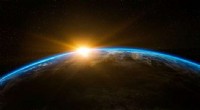
* Stars: Stars are the most common objects that generate their own light. They do this through nuclear fusion in their cores, which releases energy in the form of light and heat.
* Planets: Planets reflect light from their stars. They don't produce their own light, but we see them because they reflect sunlight.
* Moons: Similar to planets, moons also reflect light from their stars.
* Other Objects: There are other objects in space that produce light, but not in the same way as stars. For example,
* Nebulae: These are clouds of gas and dust that can be illuminated by nearby stars.
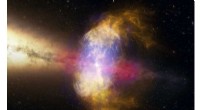
* Supernovae: These are massive explosions of dying stars that release an incredible amount of light.
* Quasars: These are incredibly bright, distant objects powered by supermassive black holes.
So, the answer to your question really depends on how you define "produces light."