1. Earth as a Model:
* Geological Processes: Understanding Earth's tectonic plates, volcanoes, earthquakes, and erosion patterns helps scientists recognize similar processes on other planets. By observing these processes on Earth, they can develop models to explain how they work on other planets.
* Climate and Atmosphere: Earth's atmosphere and climate are incredibly complex, but studying them allows scientists to understand the basic principles of how planets interact with their stars and generate weather patterns. This knowledge is crucial for understanding the atmospheres of other planets, including whether they might be habitable.
* Water and Life: Earth's oceans, rivers, and lakes are vital to life as we know it. Studying how water exists on Earth, how it interacts with the environment, and how it supports life helps scientists search for similar conditions on other planets.
2. Comparative Planetology:
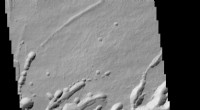
* Similar Features: Comparing Earth to other planets with similar features, like Mars's canyons or Venus's volcanoes, allows scientists to draw connections and understand how different factors (like gravity, composition, and distance from the sun) affect these features.
* Differences and Extremes: By studying the extreme conditions found on other planets, like Jupiter's massive storms or the scorching surface of Mercury, scientists can gain a broader understanding of the limits of planetary evolution and the potential for life beyond Earth.
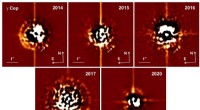
* Exoplanet Analysis: The study of Earth provides a framework for understanding exoplanets, those planets orbiting other stars. By comparing exoplanet data to Earth's properties, we can estimate their atmospheric composition, size, and potential habitability.
3. Technological Advancement:
* Remote Sensing: Studying Earth from space with satellites and telescopes has advanced our understanding of the planet and allowed us to develop sophisticated remote sensing techniques. These techniques are now being used to study other planets and their moons.
* Modeling and Simulation: Studying Earth has led to the development of advanced computer models and simulations to understand complex planetary processes. These models can be adapted to study the dynamics of other planets and predict their evolution over time.
In conclusion, studying Earth is crucial for understanding other planets. By observing, analyzing, and modeling Earth's processes, scientists can apply this knowledge to unravel the mysteries of our solar system and beyond.