Here's a breakdown:
What you can see with a telescope:
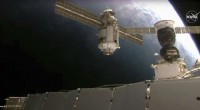
* The International Space Station (ISS): This is the easiest satellite to spot because it's large and bright. Even a simple pair of binoculars can help you see it, and a small telescope will make it look even more impressive.
* Bright satellites: Some other satellites, like the Hubble Space Telescope, are also relatively bright and can be seen with a telescope. You might need a slightly larger telescope to catch them, though.
* Starlink satellites: These are relatively new and can be seen in a line, forming a "train" across the sky. They are bright enough to be seen with the naked eye, but a telescope can help you see more of them.
What you can't see with a telescope:
* Most satellites are too small and faint to be seen with a telescope. Even with the most powerful telescopes, you won't be able to see most satellites unless they are exceptionally large or reflecting a lot of sunlight.
* You can't see satellites that are in the Earth's shadow. These satellites are not illuminated by the sun and therefore invisible to the naked eye and even telescopes.
To help you see satellites, consider these factors:
* Location: Choose a location with minimal light pollution and clear skies.
* Timing: Satellites are more visible at dusk or dawn when they are backlit by the sun. You can use websites like Heavens-Above to find out when and where to look for specific satellites.
* Telescope size: A larger telescope will gather more light and make it easier to see fainter objects, including satellites.
In conclusion: It's possible to see some satellites with a telescope, but it's not guaranteed for all of them. The visibility of a satellite depends on its size, brightness, and position relative to the sun and Earth.