Similarities:
* Constellations: The constellations would have been the same, as the stars' relative positions change very slowly over time. You would still recognize familiar patterns like Orion, Ursa Major, and the Milky Way.
* Planets: The planets would have been visible, though their positions would have varied due to their orbital motion.
* Stars: The majority of the stars would have been in the same positions, as their apparent motion is slow due to their vast distances.
Differences:
* Precession: The Earth's axis slowly wobbles over time, a phenomenon called precession. This means that the position of the celestial poles (the points where the Earth's axis intersects the celestial sphere) shifts over long periods. As a result, the north star would have been different. 2000 years ago, the star Thuban in the constellation Draco was the north star. Today, it's Polaris in Ursa Minor.
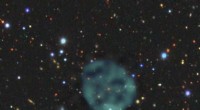
* Supernovae: While infrequent, supernovae are spectacular events that can significantly alter the night sky. There have been several supernovae in the past 2000 years that would have been visible to the naked eye, leaving behind new, bright objects in the sky.
* Comet Visibility: Comets are notoriously unpredictable, and their appearances in the sky vary. Some comets might have been visible 2000 years ago that we don't see today, and vice-versa.
* Light Pollution: 2000 years ago, there was no artificial light pollution, making the night sky incredibly bright and full of stars. Today, the majority of the world's population lives in areas with light pollution, which obscures many fainter stars.
In essence:
While the constellations and most stars would have looked very similar, there were some distinct differences in the night sky 2000 years ago. The change in the north star, the possibility of seeing supernova remnants and different comets, and the absence of light pollution would have significantly impacted the experience of observing the night sky back then.