Here's a breakdown of what you need to know about stellar radiation:
1. Source of the Energy:
* Stellar radiation originates from nuclear fusion reactions happening in the core of stars. These reactions convert hydrogen into helium, releasing vast amounts of energy in the process.
2. Types of Radiation:
* Electromagnetic Spectrum: The energy is released as electromagnetic radiation, which travels at the speed of light and can be categorized according to its wavelength.
* Visible Light: This is the portion of the spectrum that we can see with our eyes. Different wavelengths of visible light appear as different colors.
* Infrared Radiation: We feel this as heat.
* Ultraviolet Radiation: This can be harmful to living organisms.
* X-rays and Gamma Rays: These are high-energy radiation types.
3. Importance of Stellar Radiation:
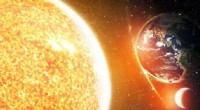
* Light and Heat for Planets: Stellar radiation is the primary source of light and heat for planets in a star's system, making life possible on Earth.
* Stellar Properties: By studying the spectrum of a star's radiation, astronomers can determine its temperature, chemical composition, luminosity, and other important properties.
* Astrophysics: Stellar radiation is a fundamental tool for understanding the physics of stars, star formation, and the evolution of galaxies.
4. Factors Influencing Stellar Radiation:
* Star Size: Larger stars are hotter and emit more radiation than smaller stars.
* Star Age: Younger stars tend to be hotter and brighter than older stars.
* Chemical Composition: The composition of a star influences the types of radiation it emits.
In summary, stellar radiation is a crucial aspect of astrophysics, providing us with invaluable information about stars and their evolution. It plays a vital role in the existence and functioning of planetary systems, including our own.