1. The Nebula:
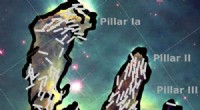
- It all started with a giant cloud of gas and dust called a nebula. This cloud was mostly composed of hydrogen and helium, along with trace amounts of other elements.
- The nebula was held together by its own gravity, but it was also constantly moving and swirling.
2. Collapse and Heating:
- Over time, small disturbances within the nebula caused some regions to become denser.
- Gravity pulled more and more material into these denser areas, causing them to collapse and heat up.
- As the core of the collapsing cloud got smaller, its density and temperature increased dramatically.
3. Nuclear Fusion Ignition:
- At a certain point, the core of the collapsing cloud became so hot and dense that nuclear fusion began.
- This is the process where hydrogen atoms fuse together to form helium, releasing a tremendous amount of energy.
- This energy, in the form of light and heat, is what powers the sun.
4. Hydrostatic Equilibrium:
- The outward pressure from the nuclear fusion in the sun's core balances the inward pull of gravity. This state of equilibrium is what keeps the sun stable.
5. Main Sequence Star:
- Once the fusion process ignited, the sun entered a stable phase of its life called the main sequence.
- This is the stage where the sun currently resides.
6. Future Evolution:
- The sun will continue to burn hydrogen for billions of years. Eventually, it will run out of hydrogen fuel in its core.
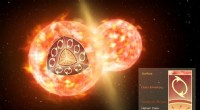
- At this point, the sun will begin to evolve into a red giant, expanding and engulfing the inner planets of our solar system.
- After the red giant phase, the sun will eventually shed its outer layers, becoming a white dwarf. This is a dense, hot, and small object that slowly cools over time.
So, the sun's existence is a result of a long and intricate process of gravitational collapse, nuclear fusion, and ongoing stellar evolution.