Observational methods involve gathering data from the universe and analyzing it:
* Telescopic Observations: Scientists use telescopes (both ground-based and space-based) to observe stars and planets in various stages of formation. They study their light, temperature, composition, and motion to understand the physical processes involved.
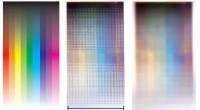
* Spectroscopy: Analyzing the light emitted by stars and planets helps scientists determine their chemical composition, temperature, and velocity.
* Astrometry: Measuring the precise positions and movements of stars and planets over time can reveal the gravitational influences and interactions between them.
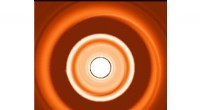
* Direct Imaging: Using advanced imaging techniques, scientists can directly capture images of young stars and planets forming in protoplanetary disks.
Theoretical methods involve developing models and simulations based on fundamental physical laws:
* Computer Modeling: Scientists create computer simulations that mimic the physical conditions and processes of star and planet formation. These models help test different theories and predict the outcomes of various scenarios.
* Analytical Models: Using mathematical equations and physical principles, scientists develop simpler models that describe the behavior of matter and energy during star and planet formation.
* Laboratory Experiments: While it's impossible to replicate the conditions in space directly, scientists perform laboratory experiments on Earth to study small-scale processes related to star and planet formation, such as dust grain collisions and chemical reactions.
The scientific process is iterative, meaning that observations and theoretical predictions constantly inform each other:
1. Observations: Scientists make observations of stars and planets using telescopes and other instruments.
2. Hypothesis: They formulate hypotheses to explain these observations, based on their understanding of physics and chemistry.
3. Theory: They develop theories to explain the observed phenomena, using mathematical models and simulations.
4. Predictions: The theories make predictions about what should be observed in other systems or under different conditions.
5. Further Observations: Scientists conduct further observations to test the predictions of their theories.
6. Refinement: Theories are refined or replaced based on the results of these observations, leading to a deeper understanding of star and planet formation.
Key Points:
* Star and planet formation is a complex process that involves a wide range of physical and chemical processes.
* Scientists use a combination of observational and theoretical methods to study these processes.
* The scientific process is iterative, meaning that observations and theories are constantly refined and improved over time.
This constant interplay between observational and theoretical methods allows scientists to continually refine our understanding of how stars and planets form.