The square of the orbital period of a planet is proportional to the cube of the semi-major axis of its orbit.
Here's a breakdown:
* Orbital Period: The time it takes for a planet to complete one full orbit around the Sun.
* Semi-major axis: The average distance between a planet and the Sun.
Explanation:
1. Gravitational Force: The Sun's gravity pulls on the planet, keeping it in orbit. The strength of this gravitational force decreases with distance.
2. Speed and Path: A planet further away from the Sun experiences weaker gravity. Therefore, it needs to travel at a slower speed to maintain its orbit. This slower speed results in a longer orbital period.
3. Elliptical Orbits: Planets don't orbit in perfect circles, but in elliptical paths. The semi-major axis is a measure of the average distance of the ellipse.
In simpler terms:
Imagine two planets, one close to the Sun and one far away. The closer planet experiences a stronger gravitational pull, making it "fall" towards the Sun faster. To stay in orbit, it needs to move at a higher speed. The farther planet experiences weaker gravity, so it needs to move slower to stay in orbit. This slower speed translates to a longer orbital period.
Example:
* Mercury: Closest to the Sun, has a short orbital period of about 88 Earth days.
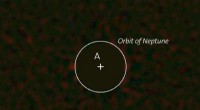
* Neptune: Farthest from the Sun, has a long orbital period of about 165 Earth years.
Let me know if you'd like to explore any of these concepts in more detail!