Earth: Our familiar blue sky is caused by Rayleigh scattering, where blue light is scattered more effectively by the atmosphere than other colors.
Mars: The Martian sky is typically a pale butterscotch or pinkish-brown. This is due to a combination of factors:
* Dust: The Martian atmosphere is filled with fine, reddish dust particles that scatter sunlight.
* Thin Atmosphere: The atmosphere is much thinner than Earth's, leading to less scattering overall.
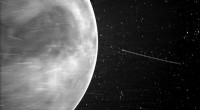
Venus: Venus's sky is a thick, hazy orange or yellowish-brown. This is because the dense Venusian atmosphere is dominated by clouds of sulfuric acid.
Jupiter: Jupiter's sky is a beautiful, deep blue. This is because its atmosphere contains a significant amount of methane, which absorbs red light and reflects blue light.
Saturn: Saturn's sky is also blue, but it is less intense than Jupiter's. This is because the methane content in its atmosphere is lower.
Uranus: Uranus has a unique cyan or bluish-green sky. The reason for this color is the presence of methane in its atmosphere, which absorbs red light and reflects blue and green light.
Neptune: Neptune's sky is a vibrant blue, very similar to Uranus. Methane in its atmosphere is responsible for this color.
Other Factors:
* Time of Day: Just like on Earth, the color of the sky can change throughout the day on other planets. For example, sunsets on Mars can be blue!
* Atmospheric Composition: The composition of a planet's atmosphere plays a major role in determining its sky color.
* Weather Patterns: Clouds and other weather phenomena can also impact the appearance of the sky.
Interesting Note: We haven't yet sent probes to get a direct look at the sky of planets like Mercury, but based on their atmospheric compositions, they are likely to have very different colors than what we see on Earth.
Let me know if you'd like to learn more about any specific planet!