From Earth:
* Move across the sky: Due to the Earth's rotation, constellations appear to rise in the east, move across the sky throughout the night, and set in the west.
* Change position throughout the year: The Earth's orbit around the Sun causes different constellations to be visible at different times of the year. For example, Orion is prominent in the winter sky but disappears in the summer.
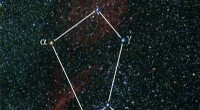
* Maintain their shape: Though the stars within a constellation are at vastly different distances from us, they appear to hold their familiar shape because they are so far away.
In reality:
* Stay relatively fixed: The stars in a constellation are actually very far apart and don't move in relation to each other. Their apparent movement is a result of Earth's movement.
* Move slowly over very long periods: While stars appear fixed from our perspective, they are actually moving through space at tremendous speeds. However, these movements are so slow that it takes thousands or even millions of years for noticeable changes in their positions.
So, while constellations appear to dance across our sky and shift with the seasons, their true nature is one of immense distance and slow, but constant, motion.