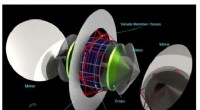
* Light Gathering: Telescopes are designed to collect and focus light from distant objects, like stars in constellations. The larger the telescope's primary mirror or lens, the more light it can gather, making faint objects visible.
* Magnification: Telescopes provide magnification, allowing you to see details of the stars within Ursa Major that are impossible to see with the naked eye.
* Spectral Analysis: Some telescopes are equipped with spectrographs, which break down light into its component wavelengths. This allows astronomers to study the composition, temperature, and motion of stars in the constellation.
While a telescope is the primary instrument, other tools might be used in conjunction:
* Cameras: Cameras can be attached to telescopes to capture images of Ursa Major, allowing for detailed analysis.
* CCD Detectors: Charge-coupled devices (CCDs) are highly sensitive light detectors used in astronomy to capture faint light.
Ultimately, the specific instrument used would depend on the type of research being conducted. For example, if you wanted to study the chemical composition of the stars, you would need a telescope equipped with a spectrograph.