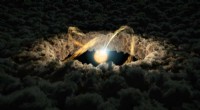
Stars: The most prominent component of a galaxy, they are massive, luminous spheres of plasma held together by their own gravity. Stars come in a wide range of sizes, masses, temperatures, and colors.
Gas and Dust: This interstellar medium fills the space between stars.
* Gas: Primarily hydrogen and helium, though other elements exist in trace amounts. This gas can be heated by starlight and form nebulae – clouds of gas and dust.
* Dust: Microscopic particles of heavier elements like carbon, silicon, and iron. It can block visible light, but it plays a role in the formation of new stars and planets.
Dark Matter: A mysterious substance that doesn't emit light but exerts a gravitational pull. It makes up the majority of the mass in galaxies and plays a crucial role in their structure and evolution.
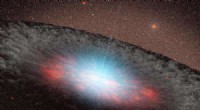
Black Holes: Supermassive black holes are thought to reside in the center of most galaxies, including our own Milky Way. They are regions of spacetime where gravity is so strong that nothing, not even light, can escape.
Other Objects:
* Nebulae: Clouds of gas and dust that can be sites of star formation.
* Star Clusters: Groups of stars bound together by gravity. There are two types: open clusters (loosely bound) and globular clusters (tightly packed, spherical).
* Planetary Systems: Stars often have planets orbiting them.
* Supernova Remnants: The expanding debris from exploded stars.
* Quasars: Extremely luminous objects powered by supermassive black holes.
Types of Galaxies:
* Spiral Galaxies: Have a central bulge, spiral arms, and a disk. Our Milky Way is a spiral galaxy.
* Elliptical Galaxies: Smooth, oval-shaped galaxies with very little gas and dust.
* Irregular Galaxies: Lack a regular shape and are often the result of galactic collisions or interactions.
The composition and structure of a galaxy can vary greatly, but the basic components mentioned above are common to most galaxies. Understanding these components helps us understand the evolution and behavior of galaxies in the Universe.