* Galaxies vary greatly in size: Some are dwarf galaxies with just a few million stars, while others like the Milky Way have hundreds of billions.
* We don't know the exact number of stars: Astronomers can estimate the number of stars in a galaxy, but it's challenging to count them all, especially fainter stars.
* Star systems are complex: What constitutes a star system is subjective. Some have multiple stars orbiting each other, while others are single stars with planets.
However, we can make some general observations:
* Milky Way: Estimated to have around 100-400 billion stars. Most likely, a significant portion of these stars have planetary systems, but we don't know the exact percentage.
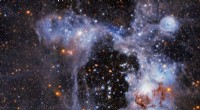
* Star Formation: Stars form in clouds of gas and dust called nebulae. These clouds can form hundreds or thousands of stars, but the percentage of those stars forming systems is unknown.
Here's what we DO know about star systems:
* Planet Formation: Planetary systems are believed to be common around stars.
* Exoplanet Discovery: Thousands of exoplanets (planets outside our solar system) have been discovered, suggesting that most stars likely have at least one planet.
In short:
* There's no fixed number of star systems in a galaxy or cloud.
* The percentage of stars with systems is likely high, but we don't know the exact figure.
* Ongoing research is constantly revealing more about star systems and their prevalence.