Temperature:
* Average: -63°C (-81°F).
* Range: Temperatures can vary significantly depending on location and time of day, from -143°C (-225°F) at night to a balmy 30°C (86°F) during the day at the equator.
* Seasonal variations: Mars has distinct seasons, with summers reaching warmer temperatures than winters.
Pressure:
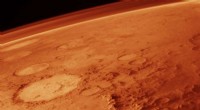
* Atmosphere: Martian atmosphere is about 100 times thinner than Earth's.
* Pressure: Average surface pressure is only about 6.1 millibars, compared to 1013 millibars on Earth. This means that water boils at a much lower temperature on Mars.
Wind:
* Strong winds: Mars can experience strong winds, reaching speeds of up to 100 km/h (62 mph). These winds are often responsible for dust storms.
Precipitation:
* Rare: Due to the thin atmosphere and low temperatures, precipitation is very rare on Mars.
* Dust: Dust storms are common, and they can sometimes engulf the entire planet. These storms can last for months.
Other notable phenomena:
* Clouds: Mars has clouds, but they are mostly made of carbon dioxide, water ice, and dust.
* Frost: Frost can form on the surface of Mars at night.
* Auroras: Mars experiences auroras, but they are much weaker than those on Earth.
Research and Exploration:
* Weather stations: Rovers and orbiters have been deployed to Mars to study its weather and climate.
* Climate change: Researchers are studying past and present Martian climate to understand the potential for liquid water and habitability on the planet.
Overall, the weather on Mars is very different from Earth's, and it presents unique challenges for future human exploration.