1. Formation:
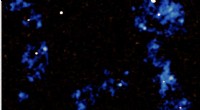
* Gravitational Collapse: Stars are born from giant clouds of gas and dust called nebulae. Gravity pulls these particles together, causing the cloud to collapse. As the cloud shrinks, its density and temperature increase.
* Nuclear Fusion Ignition: Eventually, the core of the collapsing cloud becomes so hot and dense that nuclear fusion begins. This is the process where hydrogen atoms fuse to form helium, releasing immense energy that counteracts the inward pull of gravity and stabilizes the star.
2. Evolution:
* Hydrostatic Equilibrium: During the majority of a star's life, it maintains a delicate balance between the outward pressure from nuclear fusion and the inward pull of gravity. This balance is called hydrostatic equilibrium.
* Fuel Depletion: As a star burns its hydrogen fuel, it eventually runs out. This leads to changes in the star's core, causing it to expand and cool. The star enters a new stage of its life, often becoming a red giant.
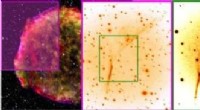
* Stellar Evolution Stages: The fate of a star after it runs out of fuel depends on its initial mass. Smaller stars like our Sun become white dwarfs, while larger stars undergo dramatic events like supernova explosions.
3. Stellar Interactions:
* Binary Systems: Many stars exist in binary systems, where two stars orbit around a common center of mass. Gravity plays a crucial role in these systems, influencing the stars' evolution and sometimes leading to dramatic events like the transfer of mass between stars.
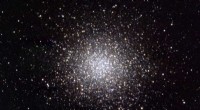
* Galactic Structure: Gravity also shapes the structure of galaxies. Stars are held together by gravity, forming the spiral arms, elliptical shapes, and other structures we observe in galaxies.
4. Death of a Star:
* White Dwarf: For stars like our Sun, gravity eventually wins out, and the star collapses into a dense, white dwarf.
* Neutron Star/Black Hole: More massive stars can collapse into even denser objects, either a neutron star or a black hole, where gravity is so strong that not even light can escape.
In summary: Gravity is the fundamental force that drives the formation, evolution, and eventual demise of stars. It governs their internal structure, their interactions with other stars, and their role in shaping the larger structures of the universe.