1. Satellites:
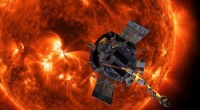
* Geostationary Satellites: These satellites orbit Earth at the same speed as the planet's rotation, providing a continuous view of a specific region. They capture images of cloud formations, track storms, and measure temperature, humidity, and wind speed.
* Polar-Orbiting Satellites: These satellites circle Earth from pole to pole, capturing data from the entire globe. They provide information about precipitation, sea surface temperature, and atmospheric composition.
2. How Satellites Help Predict Weather:
* Cloud Cover and Movement: Satellites capture images of clouds, allowing meteorologists to track their movement and development. This helps predict the path of storms and the likelihood of precipitation.
* Temperature and Humidity: Satellites measure temperature and humidity at different levels of the atmosphere, providing insights into atmospheric stability and the potential for thunderstorms.
* Wind Speed and Direction: Satellites track wind patterns, which are essential for understanding how weather systems will move and evolve.
* Sea Surface Temperature: Satellites measure the temperature of the ocean surface, which is crucial for predicting the intensity of hurricanes and other weather phenomena.
* Atmospheric Composition: Satellites measure the concentration of gases like ozone and water vapor, which can influence temperature and weather patterns.
3. Other Space Technologies:
* GPS Satellites: Data from GPS satellites is used to track atmospheric water vapor and detect precipitation.
* Radars in Space: Some satellites carry radar instruments that can penetrate clouds to measure precipitation and wind speed.
4. Data Processing and Analysis:
The data collected by space technology is processed by powerful computers to create weather models. These models use complex algorithms to simulate atmospheric conditions and predict future weather events.
5. Benefits of Space Technology for Weather Prediction:
* Global Coverage: Satellites provide data from the entire globe, allowing for more accurate and comprehensive weather forecasts.
* Real-Time Data: Satellites transmit data in real-time, enabling meteorologists to monitor and predict weather events quickly.
* High Resolution Data: Modern satellites can capture images with very high resolution, providing detailed information about weather systems.
In conclusion, space technology plays a vital role in weather prediction by providing a global perspective, real-time data, and detailed information about atmospheric conditions. These capabilities contribute significantly to more accurate and timely weather forecasts, saving lives and protecting property.