For stars that explode as supernovae:
* Supernovae of massive stars (8-50 times the mass of the Sun):
* Core-collapse supernovae: These are the most energetic and common type of supernova. The star's core collapses under its own gravity, triggering a massive explosion that blasts the outer layers into space. The remaining core collapses into a neutron star or a black hole, depending on its mass.
* Hypernovae: These are extremely powerful supernovae that occur when very massive stars collapse. They can leave behind a black hole and produce powerful jets of energy that travel at near-light speed.
* Supernovae of white dwarf stars:
* Type Ia supernovae: These occur when a white dwarf star accretes matter from a companion star, reaching a critical mass limit. This triggers a runaway nuclear fusion reaction that explodes the white dwarf, leaving no remnant behind.
* Type Ib/c supernovae: These are similar to core-collapse supernovae but occur in stars that have already lost their outer hydrogen and helium layers, leaving only a core of heavier elements.
For stars that explode as novae:
* Novae: These are less powerful explosions that occur on the surface of white dwarf stars. The white dwarf accretes matter from a companion star, leading to a thermonuclear runaway that causes a brief but intense brightening. The white dwarf survives the explosion, but loses some of its mass.
Here's a breakdown of the different possibilities:
* Neutron star: A dense, compact object formed from the collapsed core of a massive star. It has a radius of only about 10 kilometers but can be incredibly massive.
* Black hole: A region of spacetime where gravity is so strong that nothing, not even light, can escape. Black holes form from the collapse of very massive stars.
* No remnant: In some cases, the explosion completely obliterates the star, leaving no remnant behind. This is common for Type Ia supernovae.
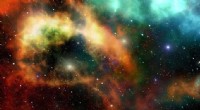
* Planetary nebula: This is a beautiful, glowing cloud of gas and dust that is ejected from a dying star. Planetary nebulae are formed by stars that are less massive than those that become supernovae.
It's important to remember that the explosion of a star is a powerful and dramatic event, leaving a lasting impact on the surrounding space. The remnants of these explosions can be a source of new star formation and can also be used to study the evolution of stars and galaxies.