1. Earth as a Model System:
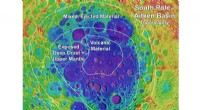
* Geological Processes: Earth's diverse geology, including plate tectonics, volcanism, erosion, and weathering, serves as a model for understanding similar processes on other planets. By studying Earth's geological history and its current state, scientists can extrapolate and apply this knowledge to interpreting data from other planets.
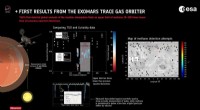
* Atmosphere: Earth's atmosphere, with its complex composition, weather patterns, and climate, provides a reference point for studying atmospheres on other planets. Understanding how Earth's atmosphere interacts with its surface, oceans, and the Sun helps us interpret data from Mars, Venus, and other planets with atmospheres.
* Life and Habitability: The existence of life on Earth makes it a unique laboratory for studying the conditions necessary for life to arise and thrive. By understanding the processes that sustain life on Earth, scientists can develop criteria for assessing the habitability of other planets.
2. Earth as a Benchmark:
* Comparative Planetology: Studying Earth in comparison to other planets allows us to identify similarities and differences in their geological, atmospheric, and chemical characteristics. This helps us understand the processes that shaped these planets and their potential for hosting life.
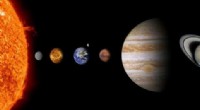
* Understanding the Solar System: Earth's position and evolution within the solar system provide context for understanding the formation and evolution of other planets. Studying Earth's history and its interactions with the Sun and other celestial bodies provides insights into the broader dynamics of the solar system.
3. Earth as a Source of Data and Technology:
* Remote Sensing and Space Exploration: The development of remote sensing techniques, spacecraft design, and other technologies for studying Earth has been crucial for understanding other planets. Techniques like radar imaging, spectroscopy, and planetary rovers were first developed for Earth observation and have been adapted for space exploration.
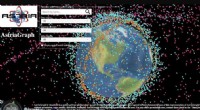
* Data Analysis and Modeling: Earth scientists have developed sophisticated techniques for analyzing data from various sources, such as satellites, ground-based observations, and laboratory experiments. These methods are now being used to interpret data from missions to other planets.
In summary: Studying Earth provides an invaluable foundation for understanding other planets by offering a model system for studying geological processes, atmospheric dynamics, and the conditions for life. It also serves as a benchmark for comparative planetology and a source of data and technologies for space exploration.