Here's why:
* The moon is tidally locked: This means the same side of the moon always faces Earth.
* Both sides receive sunlight: The "far side" of the moon, the side we don't see from Earth, is not always in darkness. It gets its own share of sunlight, just like the side we see.
Mysteries on the far side:
While the far side doesn't have a constant shroud of darkness, it does have some unique features that have sparked curiosity:
* Different terrain: The far side of the moon is more heavily cratered than the near side. This is due to the near side's protection by Earth's magnetic field, which deflects some incoming asteroids.
* The "dark side" illusion: The term "dark side" persists because we only see one side of the moon, leading to an imagined hidden side. This has fueled fictional narratives and fueled interest in what's unknown.
No confirmed mysteries:
While the far side is less studied than the near side due to limited access, there are no confirmed mysteries or hidden structures. Scientific explorations have revealed a lot about the far side, including its surface composition, topography, and geologic history.
Ongoing exploration:
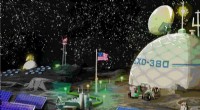
Space agencies like NASA are continuously studying the moon, including its far side. Future missions will aim to explore the far side in greater detail, possibly revealing more about its history and potential resources.
So, while the "dark side" is a poetic term, it's important to understand that both sides of the moon are illuminated by the sun, and the far side isn't shrouded in perpetual darkness.